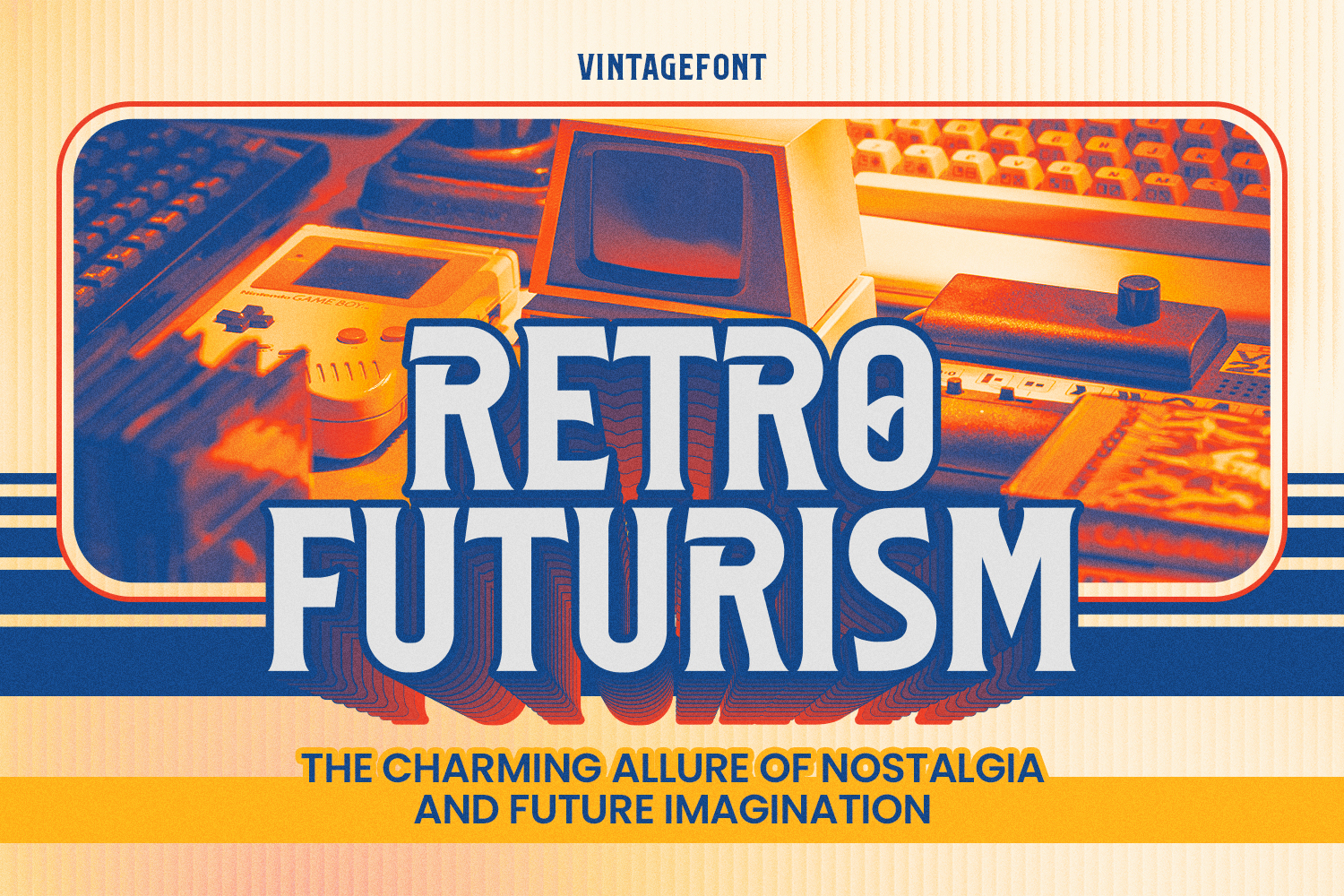
Retro futurism is a design movement that combines vintage 20th-century styles with imaginative future designs. This style is distinct because of the intriguing combination of an old-fashioned vibe and a modern element. Because of its optimism for the future and its warmth for the past, retro futurism has a unique feel.
The combination of nostalgic and futuristic elements is not just a style but also an effective medium for visual narrative. Retro elements like classic lettering, vintage-style graphics, and pastel colors contribute to the nostalgic feeling. Meanwhile, future innovation develops from the usage of futuristic components such as geometric shapes, bold colors, and metallic elements.
As a result, this article will address retro futurism, including its history, traits, and implementation. Make sure you scroll through to the end to know the details of each aspect of this style.
Table Of Content
Retro futurism was born as a cultural response to technology and future imagination in the 20th century. This trend adopts styles from the 1920s and 1930s, when the imagination of the future first began to develop. Peaking during the Space Age (1950s-1960s), humanity became highly obsessed with space exploration, satellites, and the birth of early-generation computers. During that era, artists, illustrators, and technology companies showcased visions of the future, such as flying cars, UFO sightings, and advanced robots.
The term “retro futurism” emerged in 1983, when a publisher named Lloyd Dunn created that term for his visual artwork. Since then, this term has been used by various people like art critics, writers, pop culture observers, and academics. They have been using this term to explain an aesthetic that combines futuristic imagery with a nostalgic touch.
The retro futurism style has an incredibly distinctive visual character, making it easy to recognize among other design styles. The following are some key elements of this style:
Color is the first key element that makes retro futurism easily recognizable. There are some distinctive colors often used for this style:
This style often utilizes bright neon, like blue neon or pink neon, to give a design a futuristic impression of the 1980s. Adding a chrome effect to these colors will make them even shinier, like glossy metal.
This style also utilizes smooth pastel colors like peach, mint, or baby blue. These colors are usually supported with metallic accents or glossy textures to make them look futuristic and soft at the same time.
Using a gradient of bright colors, such as from neon blue to purple or from pink to orange, is another characteristic of this style. With high contrast, these gradient colors create an impression of imaginary optimism about technology.
Typography in retro futurism plays an important role in evoking a sense of the past with the future. Here are some commonly used fonts:
To give a classic or nostalgic feel, this style often uses sci-fi, blocky, or bold font styles. This type is also widely used on classic-themed movie posters to emphasize a dramatic and vintage feel.
Sans-serif has a simple shape without serifs, with a bold geometric form giving the impression of technology and modernity.
You can visit our website, Vintagefont.net, to see the best font collections ranging from retro and classic to modern retro fonts. Our website offers a variety of fonts that are perfect for creating stunning retro futurism designs.
Visual elements in the retro futurism style are heavily influenced by futuristic shapes and geometry. The following elements frequently appear in retro futurism designs:
Circles, squares, and domes are shapes that frequently appear in retro futurism designs. This refers to the robotic architecture and visuals of the Space Age, which popularized this style.
Besides basic shapes, abstract patterns like waves, curved lines, or futuristic liquid motifs are also characteristic elements of this style. These patterns will add a dynamic impression that moves forward toward the future.
A symmetrical grid-based layout is another hallmark of this style. This was inspired by the rigid and classic look of early-generation computers. Symmetry gives the impression of neatness, order, and control, which is synonymous with a vision for the future.
Iconography serves as an element that strengthens the narrative in Retro futurism design. Sci-fi visuals, such as images of robots, spaceships, and early-generation computers, often appear as a representation of the future as imagined in the past. The presence of this visual element is not only decorative, but also conveys how people in the past imagined future technology.
This style is also characterized by the use of distinctive visual effects. Neon lights, metallic sheen, and a glossy finish create a dramatic, futuristic atmosphere. Additionally, the use of distinctive materials such as chrome, metal, and transparent plastic is often employed for a more classic futuristic impression.
Poster and Illustration
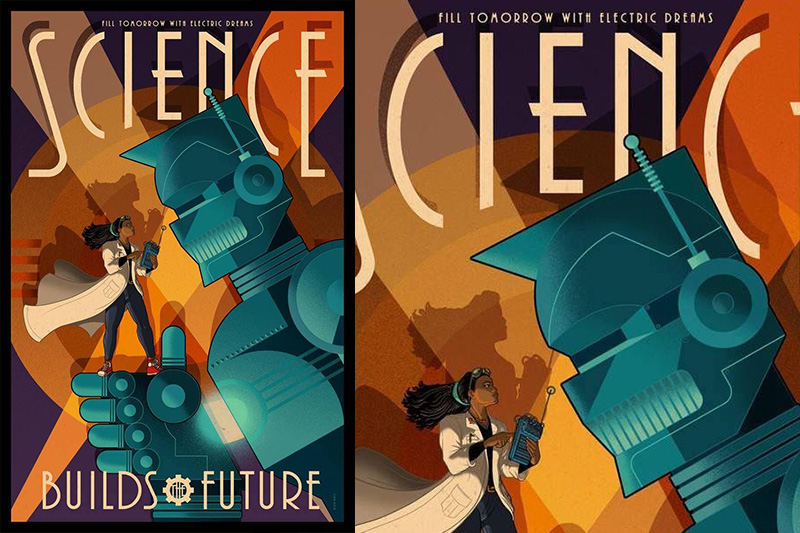
Posters are the most common media for showcasing the retro futurism style. Its distinctive features can be seen in the use of bold typography, vibrant colors, and visual elements of spaceships, planets, and futuristic robots. Poster festivals, film, comic books, music posters, and art exhibitions have widely adopted this style to create a dramatic sense of nostalgia. Additionally, the 1950s-style flat vector illustrations combined with modern visual touches also further strengthen the unique impression of this style.
Posters are the most common media for showcasing the retro futurism style. Its distinctive features can be seen in the use of bold typography, vibrant colors, and visual elements of spaceships, planets, and futuristic robots. Poster festivals, film, comic books, music posters, and art exhibitions have widely adopted this style to create a dramatic sense of nostalgia. Additionally, the 1950s-style flat vector illustrations combined with modern visual touches also further strengthen the unique impression of this style.
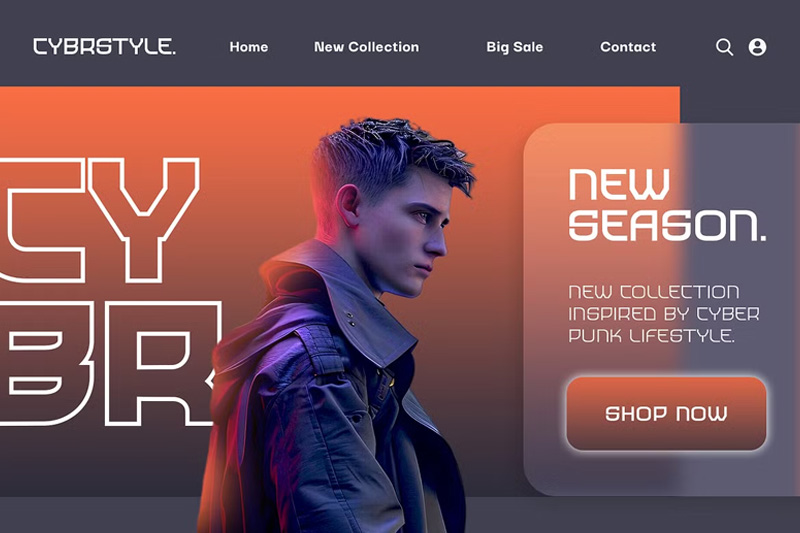
In the digital realm, retro futurism is present through interface designs that combine old-school computer grids with modern visual effects. Websites with this style often feature monospaced or sci-fi-style typography, as well as vibrant or neon colors. As a result, the interface looks like the image above, not only presenting an attractive visual appearance but also providing an imaginative experience of exploring the digital world.
The return of retro futurism is not a coincidence but rather the result of a combination of cultural, psychological, and technological factors. Here are some strong reasons why this style is gaining popularity again in the digital age:
Retro futurism evokes a sense of nostalgia. Many creators connect with their audience through past memories. Science fiction and pop culture influenced those who didn’t live in the era of retro futurism. When those visual elements are brought back to life in a modern context, audiences feel reconnected with warm and familiar childhood memories.
This style reflects technological expectations that contrast with the current world situation. In the 20th century, the future was envisioned as full of neon lights, flying cars, and harmonious modern cities. This visualization provides an escape from the often uncertain realities of the modern world, serving as a space for creative freedom to imagine a more positive future.
Digital culture and social media have also strengthened the popularity of retro futurism. Neon lights, bright gradients, and sci-fi typography proved to be highly visually appealing on social media platforms. Design trends like cyberpunk, synthwave, vaporwave, and glitch art, which are prevalent on the internet, also heavily adopt elements from this style. Those developments made this style even more widely known.
This style is popular because it provides a point of differentiation for brands and creators from other design styles. Amidst the prevalence of minimalist designs, this style stands out with its unique and bold identity, creating a visual brand with a creative, visionary, and characterful image.
Retro futurism is not just a resurfacing visual trend but a narrative that blends future imagination with past nostalgia. Distinctive elements such as neon colors, retro-modern typography, geometric shapes, and even sci-fi iconography all come together to create a visually rich identity. Its popularity today proves that human creativity never stops, even from futuristic dreams that were once unrealized.
If you’re looking for design inspiration that’s unique, emotional, and visionary all at once, this might be the time to try the retro futurism style. Are you ready to bring the past’s version of the future into your work? Explore other articles on the Vintagefont.net website for inspiration on vintage design and fonts.

